Why we backed Sector Qube
There are 30 million commercial padlocks deployed across global supply chains, warehouses, transport corridors, and energy infrastructure. Almost none of them are intelligent. Sector Qube is rebuilding that layer with smart locks that turn every shipment, every facility, and every asset into a continuously-monitored data point.
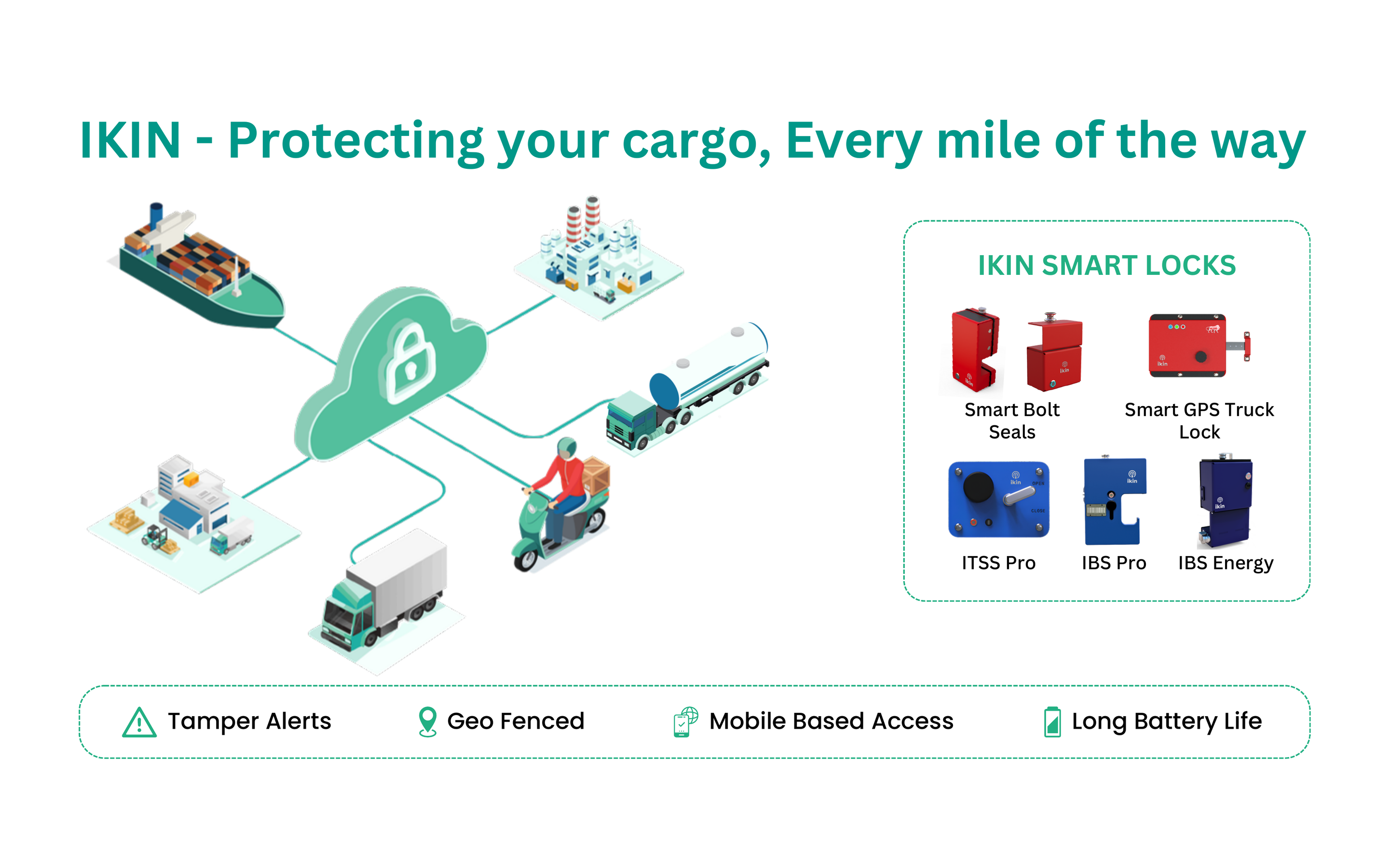
IKIN smart locks protecting cargo across distributed logistics networks.
The company
Sector Qube — operating under the iKin Global brand — designs and manufactures smart locks for commercial asset and access management. Cochin-headquartered, the company sells globally into supply-chain operators, energy and utility infrastructure, transportation networks, and facility-management organizations. The product is hardware — a robust electronic lock — but the value is the software: continuous 24/7 monitoring, geofencing, anomaly detection, and tamper alerting across an entire fleet of locks.
Why we backed them
The smart-lock category has existed for years, mostly in residential applications. The commercial opportunity — locks deployed across global supply chains, intermodal freight, energy infrastructure, and high-value commercial real estate — has been structurally under-served because the engineering bar (rugged, weather-resistant, reliable for years on a single battery) is high and the buyer profile is conservative.
Three reasons we leaned in.
First, the engineering depth was real. The Sector Qube team had built robust hardware that survived multi-year deployments in extreme conditions. Every smart-lock company has a working prototype; very few have a product that works for five years in a Saudi-summer or a Canadian-winter.
Second, the global market shape was right. India is the manufacturing hub; the demand is global. Energy operators in the Middle East, supply-chain operators in Singapore and Rotterdam, and utility companies in North America were the buyers. The cost structure of Indian engineering plus the global TAM made the financial model attractive in a way that pure-Indian or pure-Western hardware companies couldn't match.
Third, the data tail is durable. Once a customer deploys a fleet of Sector Qube locks, the platform accumulates telemetry that becomes increasingly valuable for the customer's broader risk and operations functions. The hardware sale is the wedge; the software subscription compounds.
What we did beyond capital
We supported the company's expansion into the GCC market, where energy and infrastructure operators were a strong product fit, by making introductions through our diaspora network. We helped sharpen the positioning of the platform for global enterprise buyers — particularly the argument that the manufacturing footprint in Cochin was a structural cost advantage rather than a credibility question. We worked on the financing strategy for the next round, with introductions to industrial-IoT-focused funds.
The Callapina conviction
Sector Qube is one of the strongest expressions of our DeepTech-with-a-manufacturing-edge conviction. Global business model, premium engineering, manufacturing efficiency from India, and a software layer that compounds with deployment — exactly the company shape we believe defines the next decade of industrial DeepTech investing.
— Vinod Jose, Founding GP
More portfolio case studies
Why we backed Perleybrook
Every industrial site in the world has a safety problem and a labor-shortage problem. Perleybrook builds AI-powered vision systems that solve both — replacing rooms full of human safety monitors with continuous, accurate, frame-by-frame computer vision that catches incidents before they become injuries.
Why we backed DeepIQ
Most AI companies in 2024 told a story about the foundation models. DeepIQ told a story about the unglamorous middle: the messy, multi-decade-old SCADA and historian data that runs every refinery, utility, and mine on earth — and the fact that no one had built a no-code DataOps layer that could turn that data into something AI could actually use.
Why we backed Sastra Robotics
Sastra is solving a problem that almost no one in the consumer technology world thinks about, and almost everyone in the regulated industrial world is pricing out: how do you automate the testing of physical interfaces — the touchscreens, control panels, and HMI systems — that mediate every cockpit, vehicle dashboard, surgical device, and factory line on earth?
See the company overview, traction signals, founder perspective, and related diligence context.